Q1. Distribution of respondents by industry

Q2. Distribution of respondents by job field

Q3. Percentage of time spent advancing DEI initiatives within team or across company.

* Note that none of the respondents self-reported as being in a DEI function

Respondents spend an average of

30%

of their time at work advancing DEI initiatives

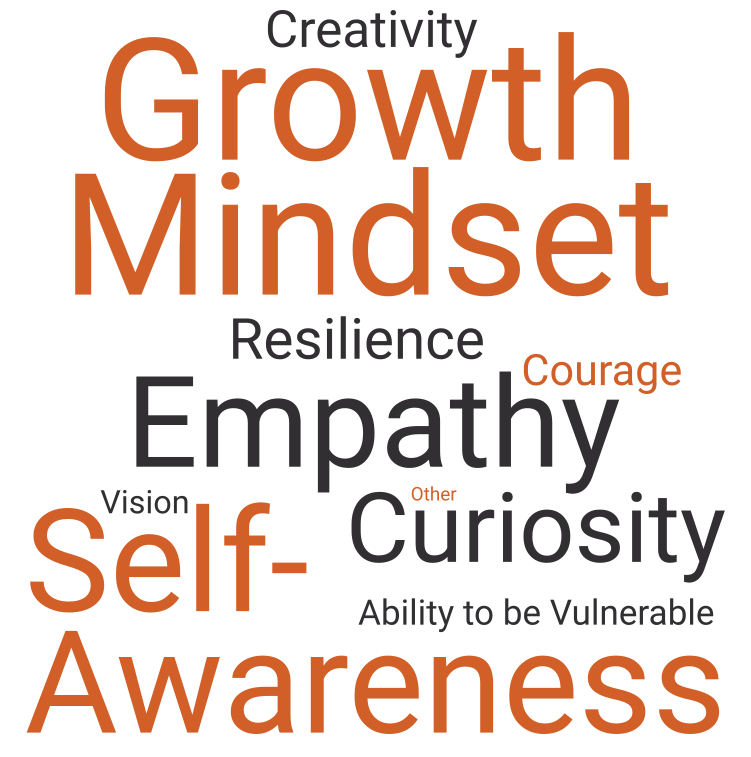
Q4. Top psychological-related competencies sought after in candidates

Hover over each competency or click "More Info" to see the percentage of respondants who answered it.

More Info
Growth mindset and desire for continuous learning 24.47%
Self-Awareness (including ability to recognize one's own biases) 20.25%
Empathy 17.72%
Curiosity 13.08%
Resilience 6.75%
Creativity 5.91%
Courage 4.64%
Ability to be vulnerable 3.38%
Vision 2.95%
Other 0.84%

Word Cloud of the responses to Q4 with the size of each word corresponding to the frequency of that response. Tooltip text

The top 3 skills highlighted by respondants are:

1
Growth mindset
and desire for continuous learning

24.47%
2
Self-awareness
(including ability to recognize one's own biases)

20.25%
3
Empathy

17.72%

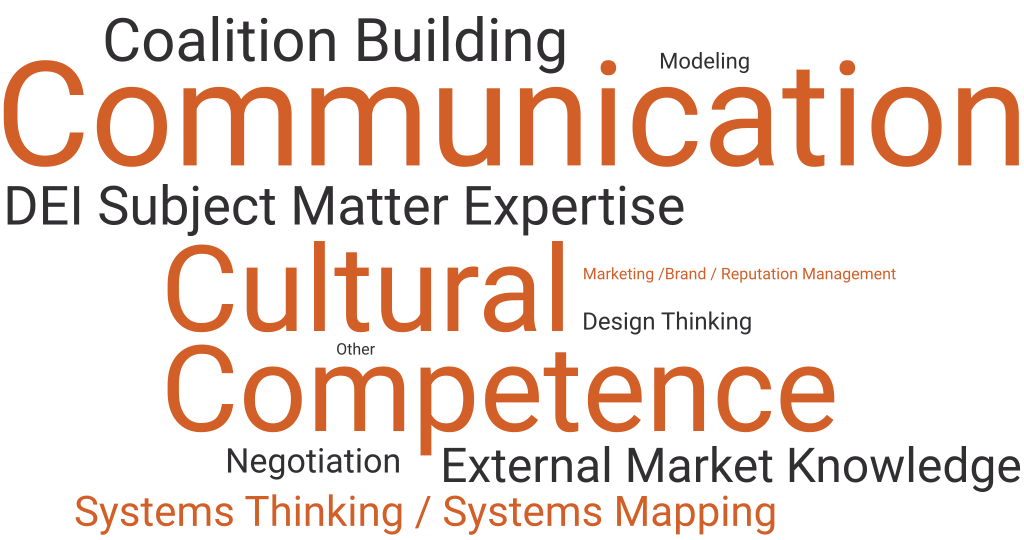
Q5. Top skills indicative of employees' ability to advance diversity, equity, and inclusion work within their roles

Hover over each competency or click "More Info" to see the percentage of respondants who answered it.

More Info
Communication (including ability to actively listen / manage differing opinions and perspectives) 28.81%
Cultural Competence (understands multiple cultural frameworks, values, and norms; able to be effective across cultural contexts) 23.31%
Coalition Building (within and cross-industry) 10.59%
DEI Subject Matter Expertise 9.32%
External market knoweldge (ability tounderstand current demographic trends and how they influence DEI, as well as diverse customer / client needs) 8.05%
Systems Thinking / Systems Mapping 6.78%
Negotiation 5.08%
Design Thinking 2.97%
Modeling 2.54%
Marketing / Brand / Reputation Management 1.27%
Other 1.27%

Word Cloud of the responses to Q5 with the size of each word corresponding to the frequency of that response. Tooltip text

The top 3 skills highlighted by respondants are:

1
Communication
(including ability to actively listen / manage differing opinions and perspectives)

28.81%
2
Cultural Competence
(understands multiple cultural frameworks, values, and norms; able to be effective across cultural contexts)

23.31%
3
Coalition Building
(within and cross-industry)

10.59%

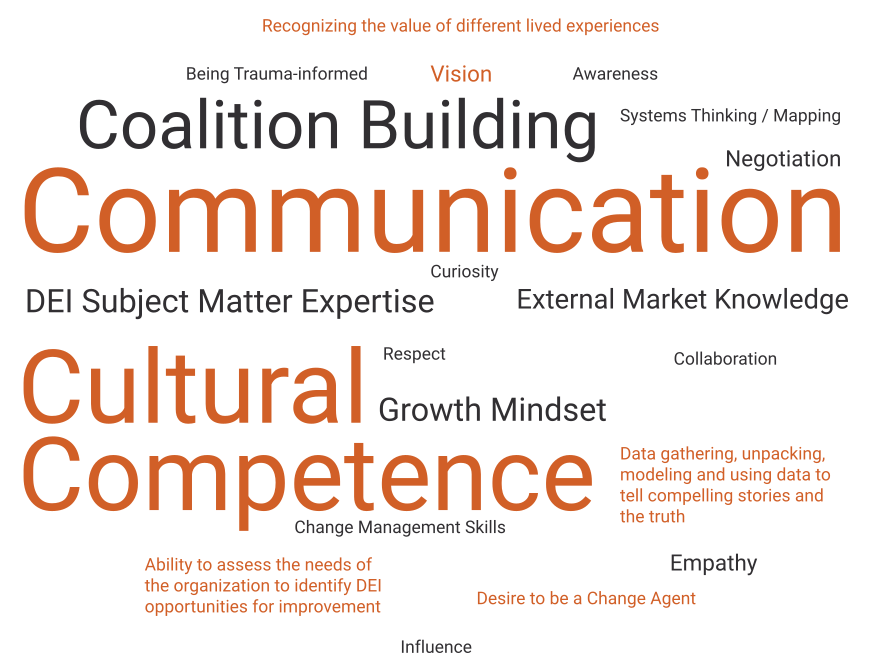
Q6. Competencies, skills, or educational backgrounds seen as most valuable for professionals to advance equity & inclusion within the team and organization

Hover over each competency or click "More Info" to see the percentage of respondants who answered it.

More Info
Communication 32.56%
Cultural Competence 20.93%
Coalition Building 12.79%
DEI Subject Matter Expertise 4.65%
Growth Mindset 4.65%
External Market Knowledge 3.49%
Empathy 2.33%
Negotiation 2.33%
Vision 2.33%
Ability to assess the needs of the organization to identify DEI opportunities for improvement 1.16%
Awareness 1.16%
Being Trauma-informed 1.16%
Change Management Skills 1.16%
Collaboration 1.16%
Curiosity 1.16%
Data gathering, unpacking, modeling and using data to tell compelling stories and the truth 1.16%
Desire to be a Change Agent 1.16%
Influence 1.16%
Recognizing the value of different lived experiences 1.16%
Respect 1.16%
Systems Thinking / Mapping 1.16%

Word Cloud of the responses to Q6 with the size of each word corresponding to the frequency of that response. Tooltip text

The top 3 skills highlighted by respondants are:

1
Communication
(including ability to actively listen / manage differing opinions and perspectives)

31.40%
2
Cultural Competence
(understands multiple cultural frameworks, values, and norms; able to be effective across cultural contexts)

20.93%
3
Coalition Building
(within and cross-industry)

12.79%

Q7. How easy it is to find the competencies you rated highly among current applicants

The average response was

2.36

on a scale of 1-5

1
2
3
4
5
2.36
(hard to find)
(easy to find)

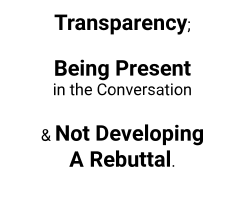
Q8. Further competencies / skills desired at the organization

Transparency; Being present in the conversations and not developing a rebuttal.
Ability for leadership to actively seek diverse opinions and preparing leaders that understand diverse customer base.
Ability to create safe spaces for ongoing learning.
Anti-racist strategies to address disparities.
Anti-racist values, ability to foster and maintain safe spaces.
Constant reminders to challenge unconscious bias.
Self awareness and understanding of working with other cultures.
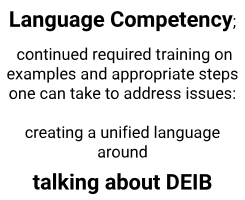
Language Competency; continued required training on examples and appropriate steps one can take to address issues; creating a unified language around talking about DEIB.
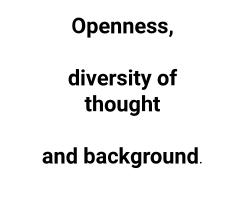
Openness, diversity of thought, and background.
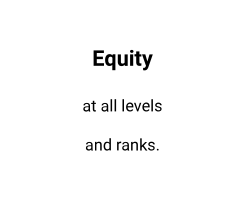
Equity at all levels and ranks.
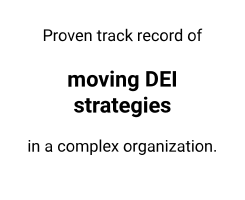
Proven track record of moving DEI strategies in a complex organization.
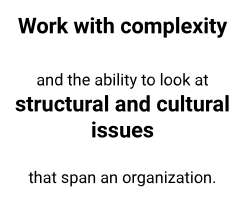
Work with complexity and the ability to look at structural and cultural issues that span an organization.
Back to Top